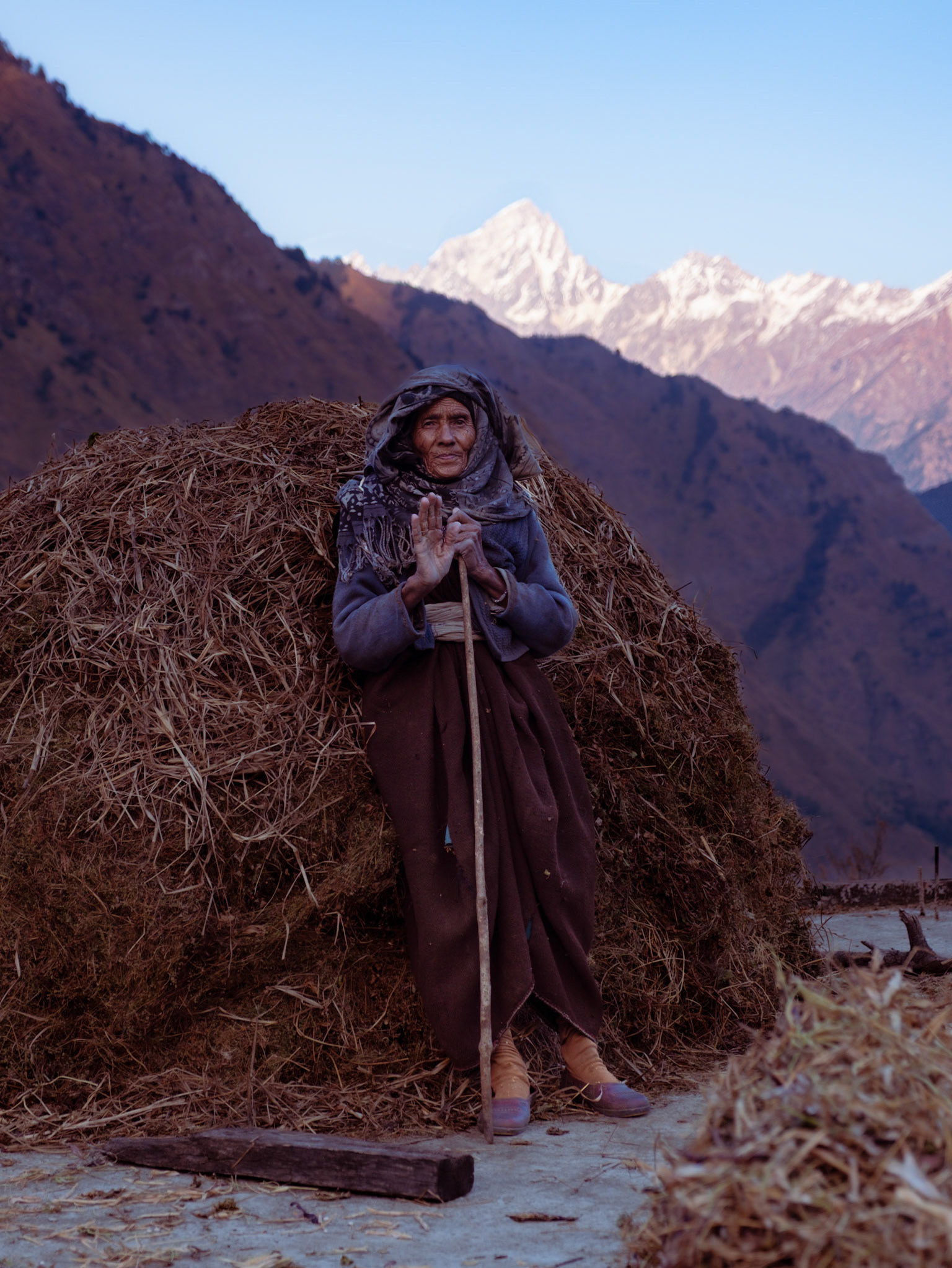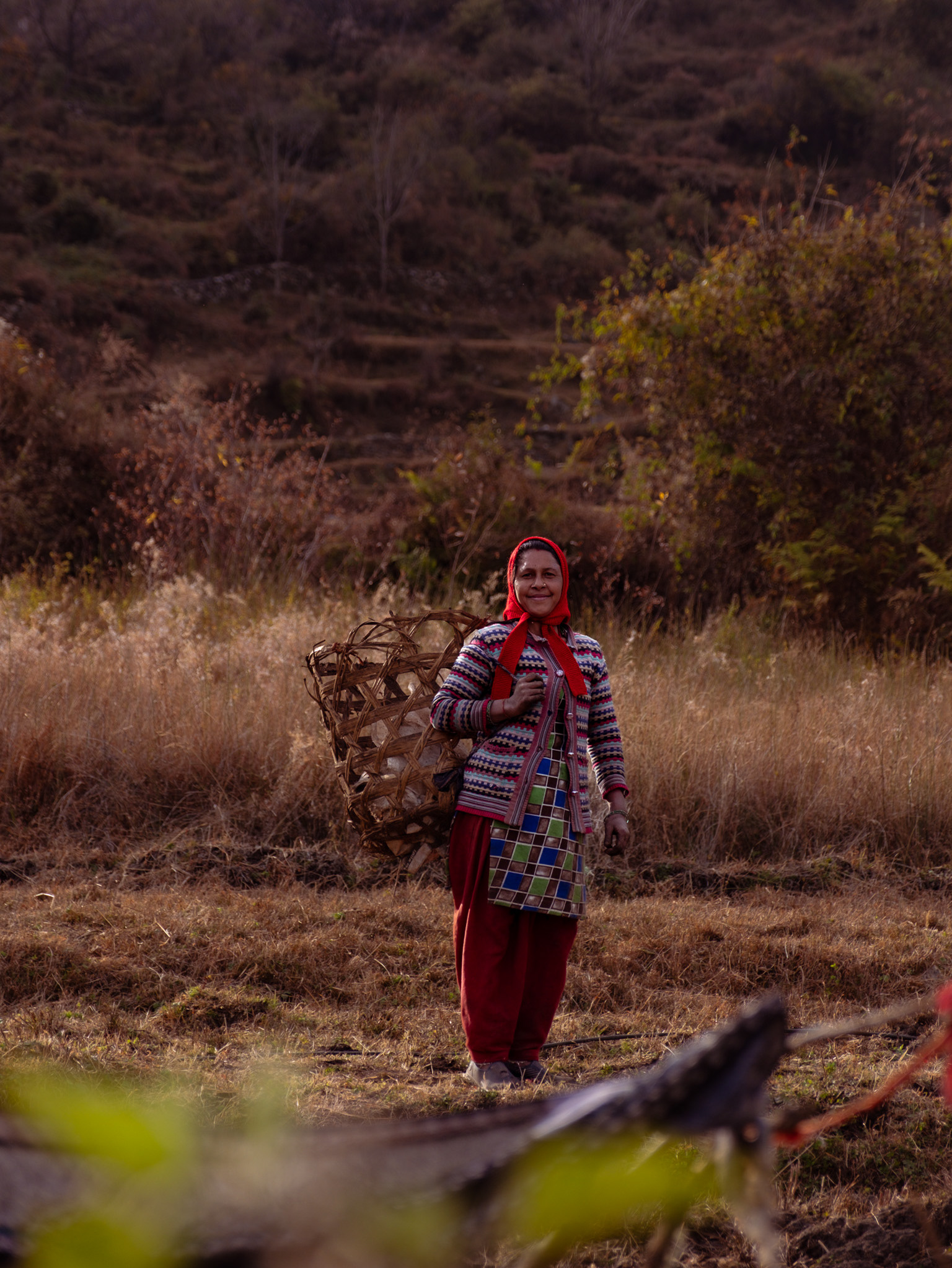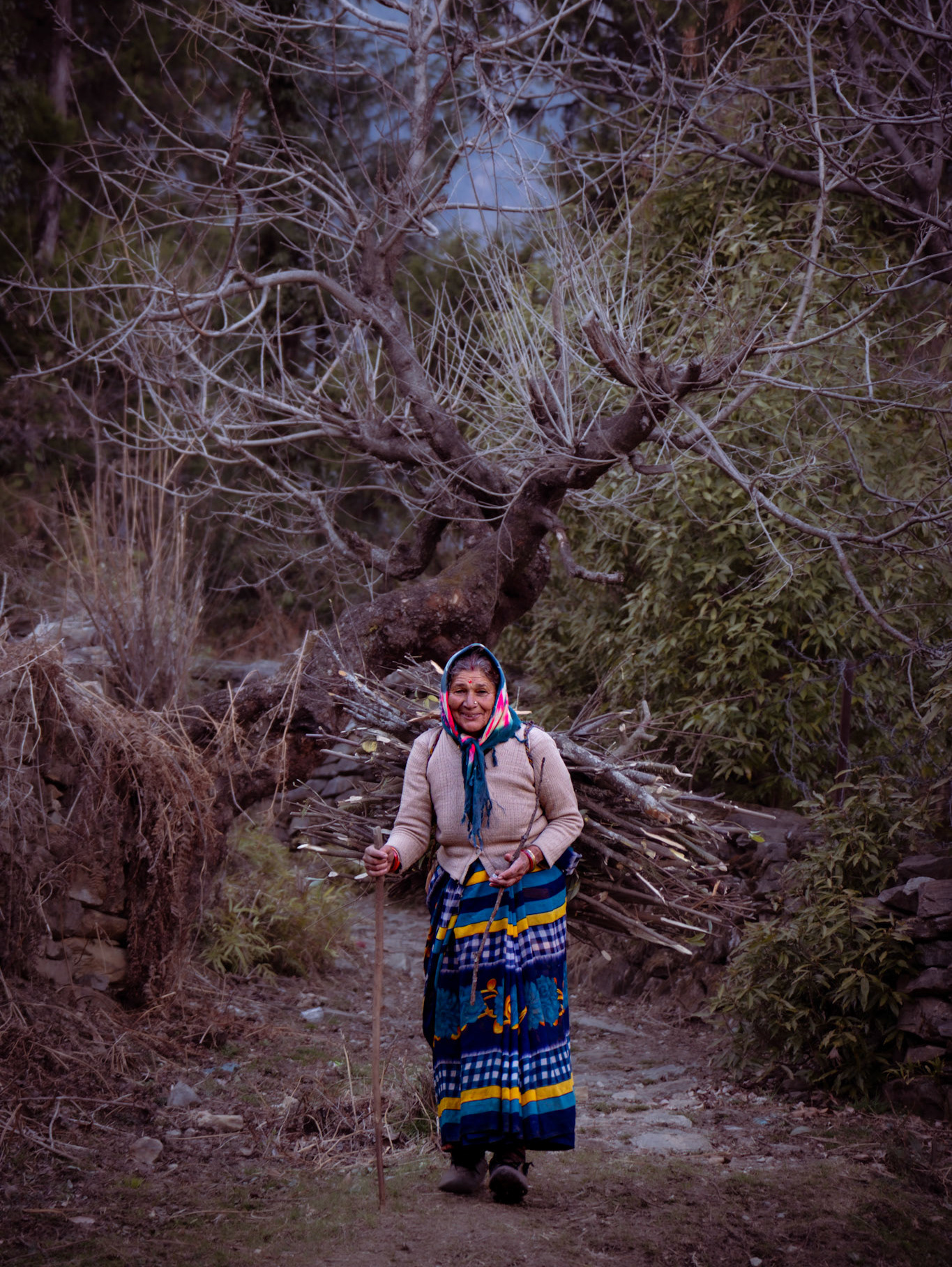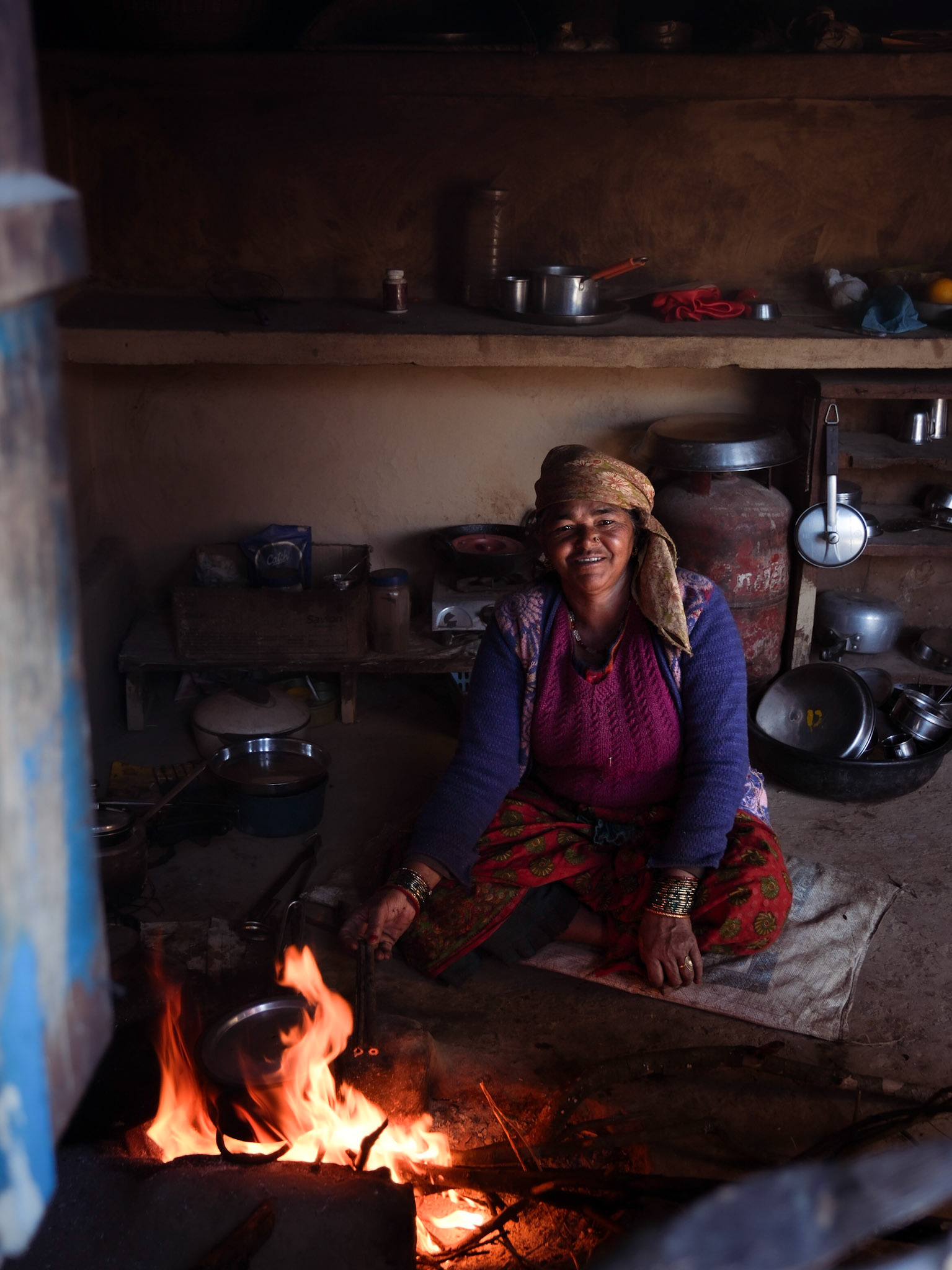
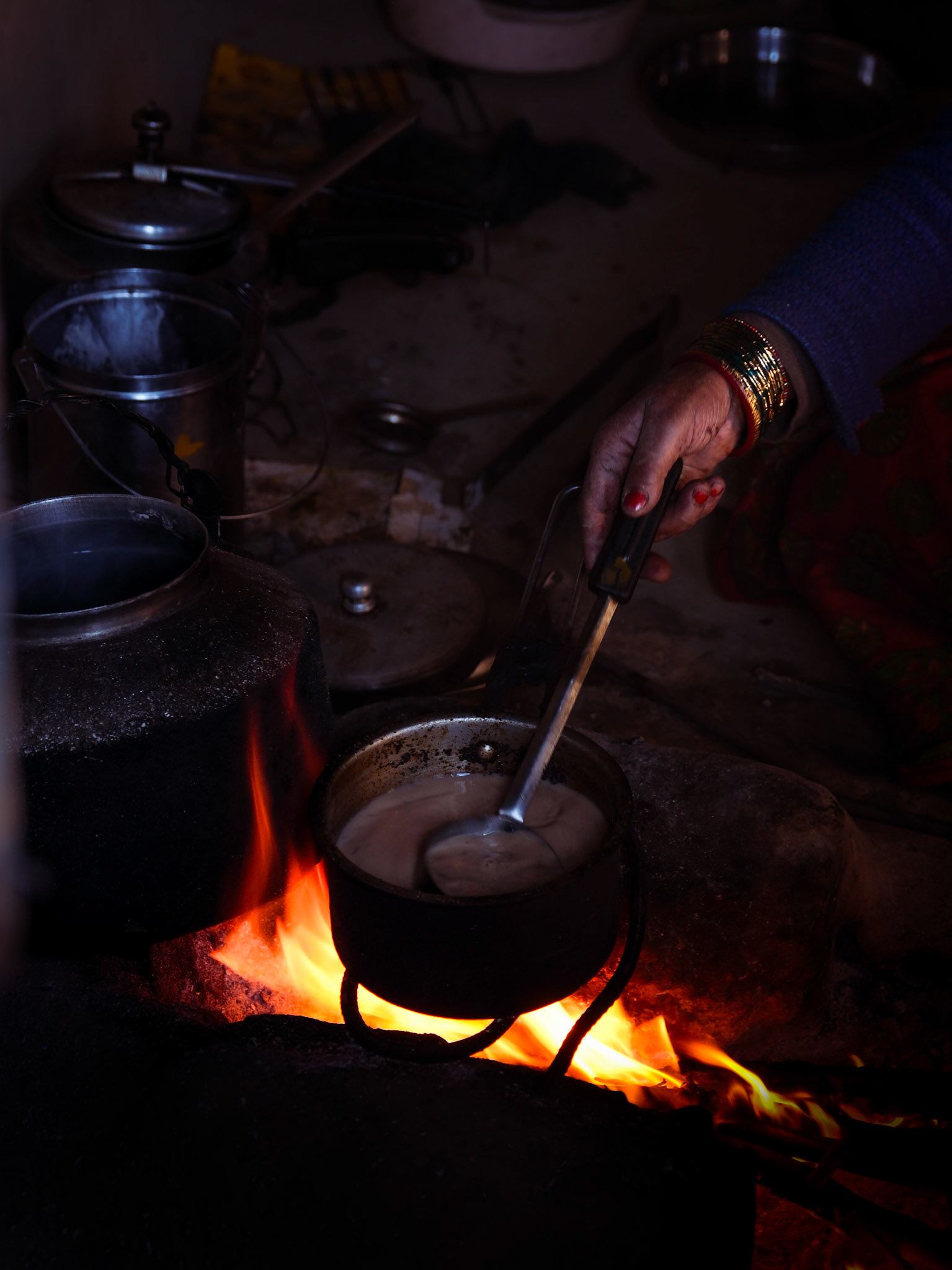
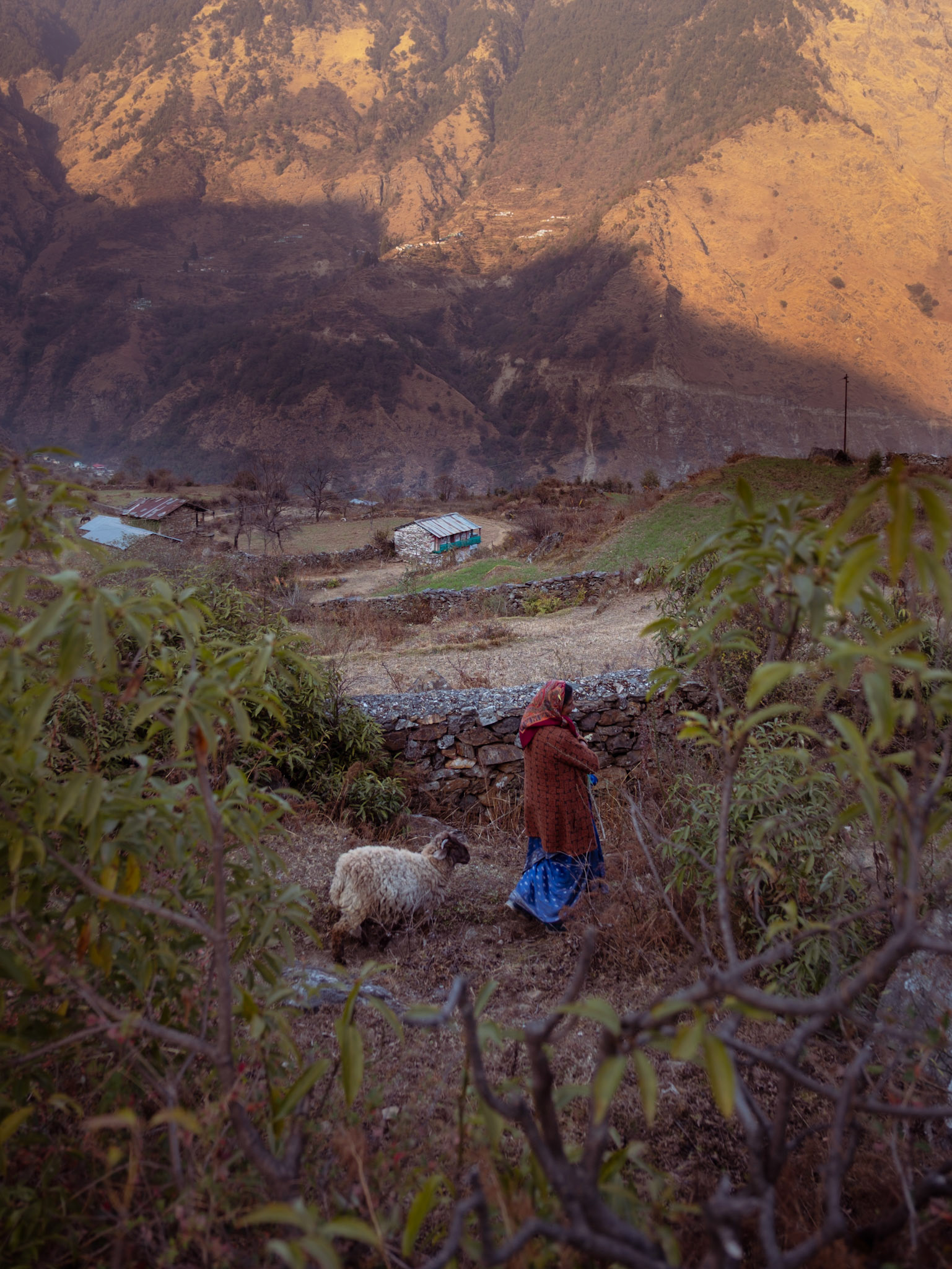
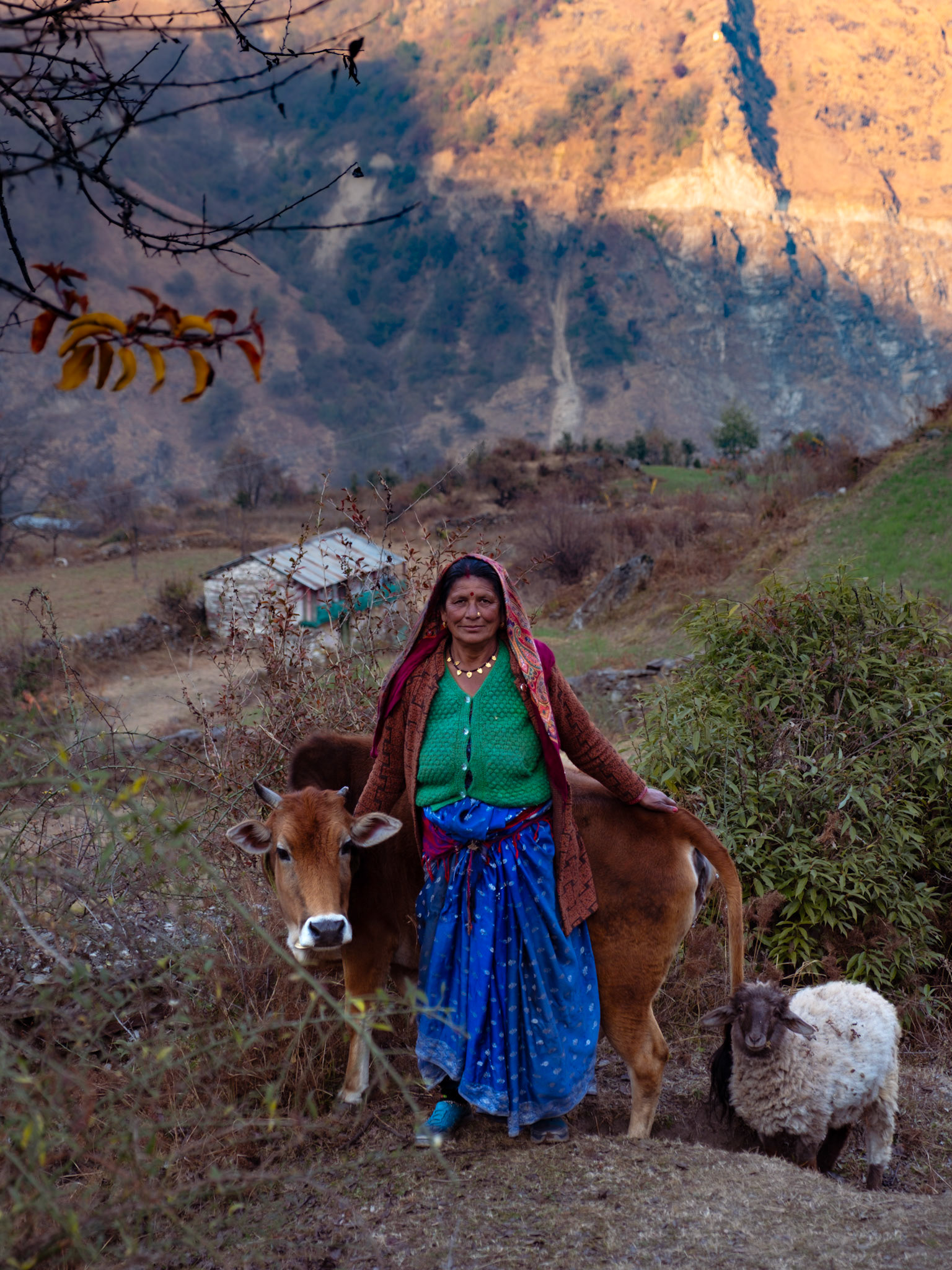
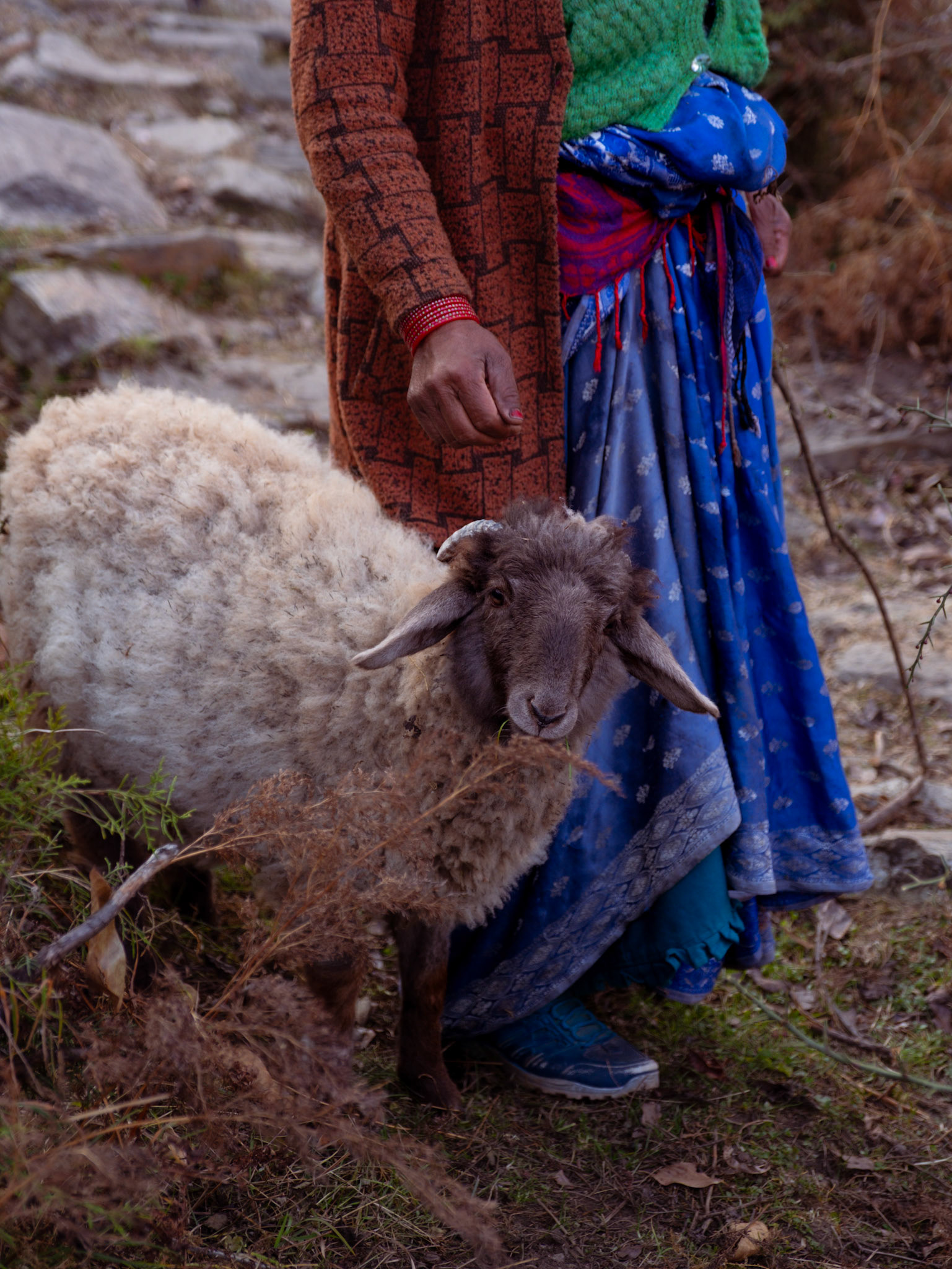
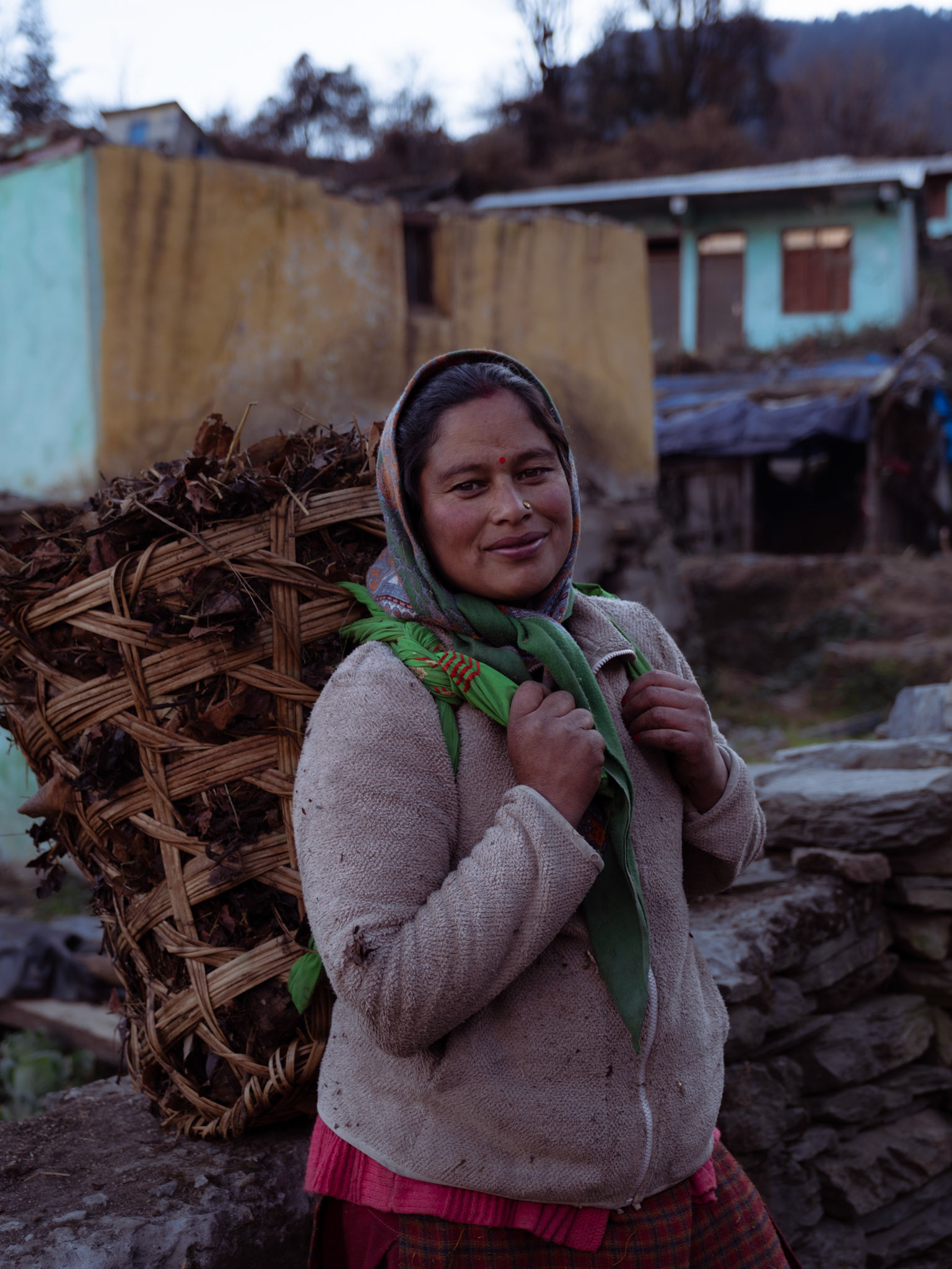
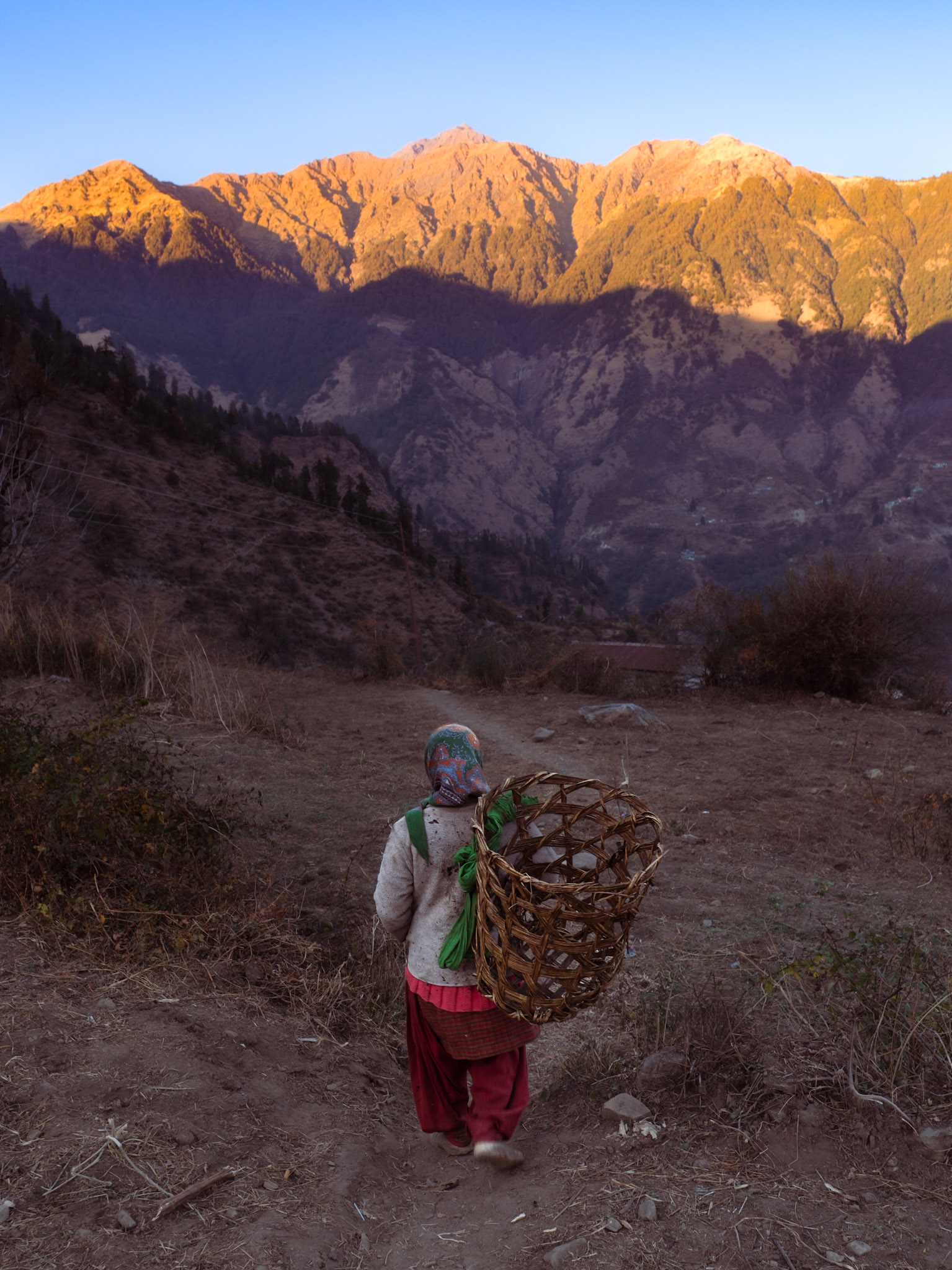
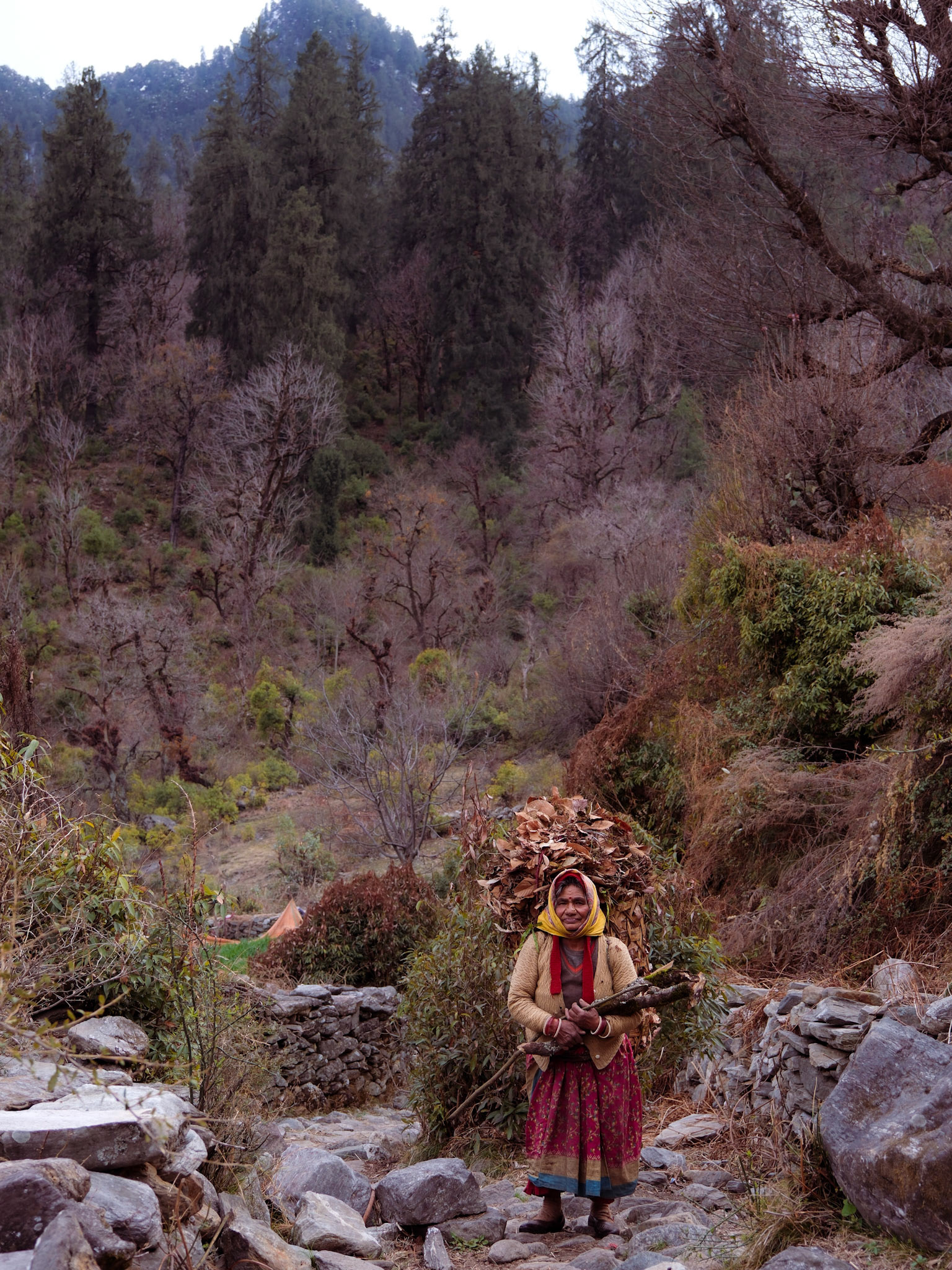
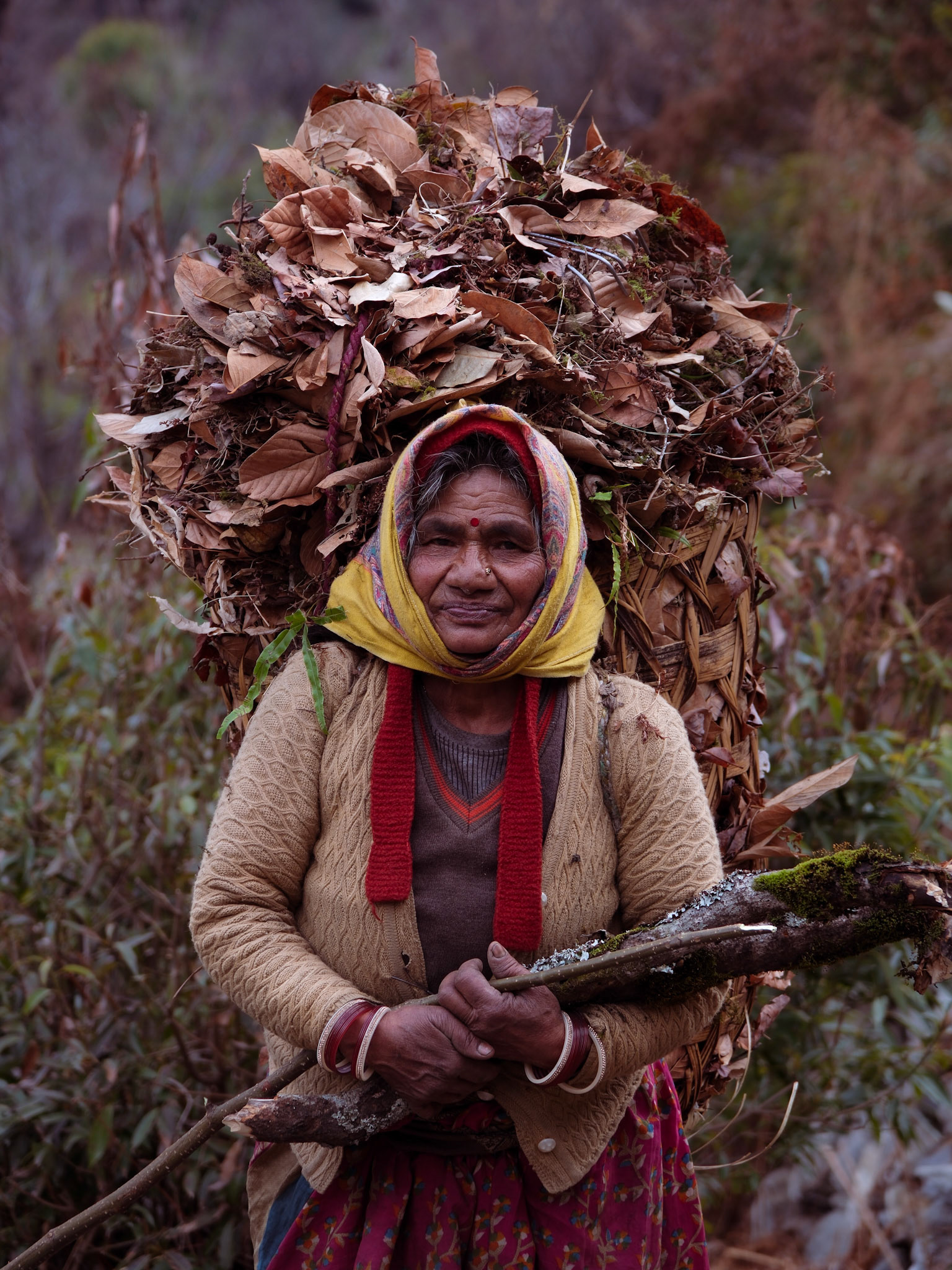
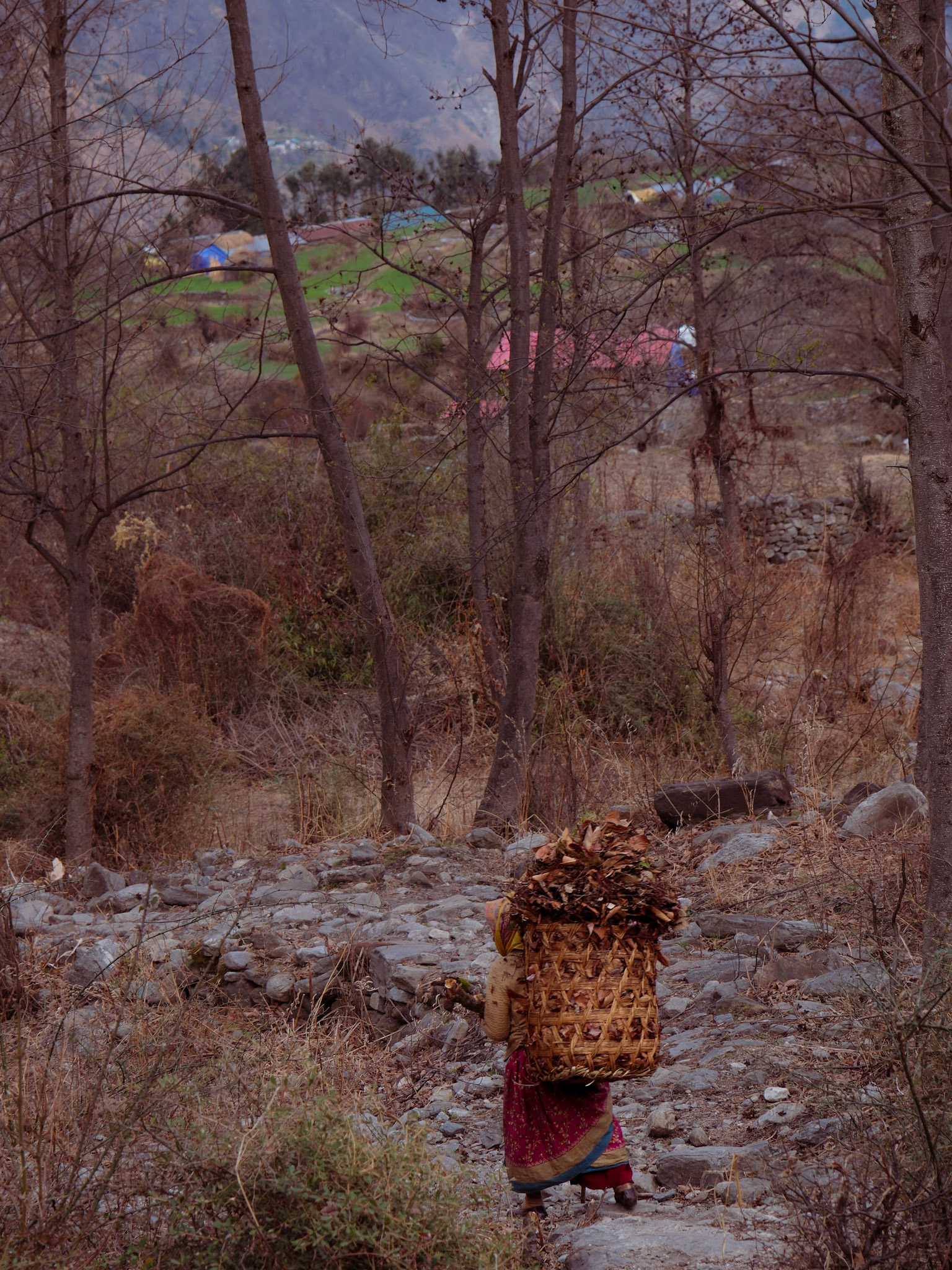
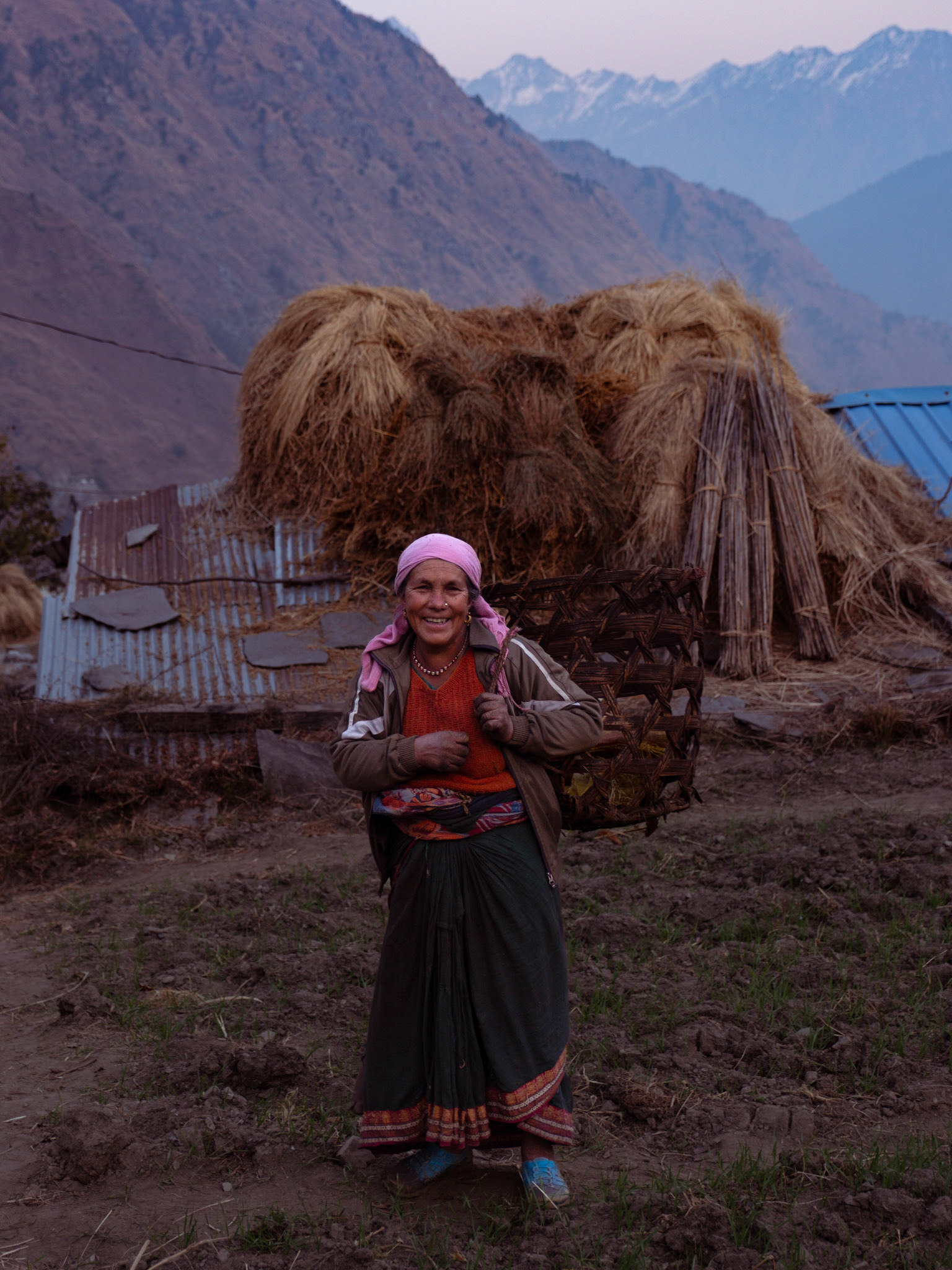
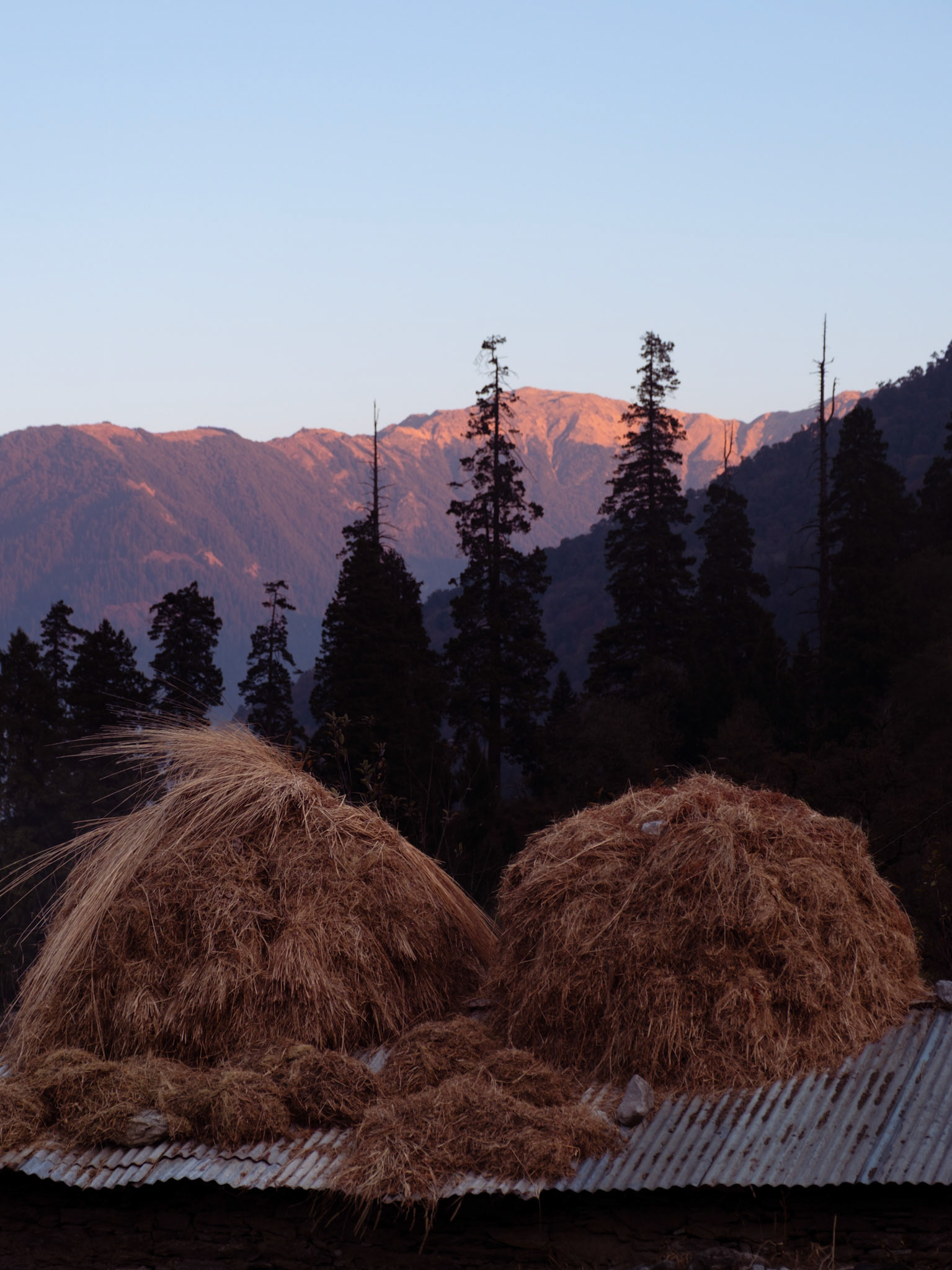
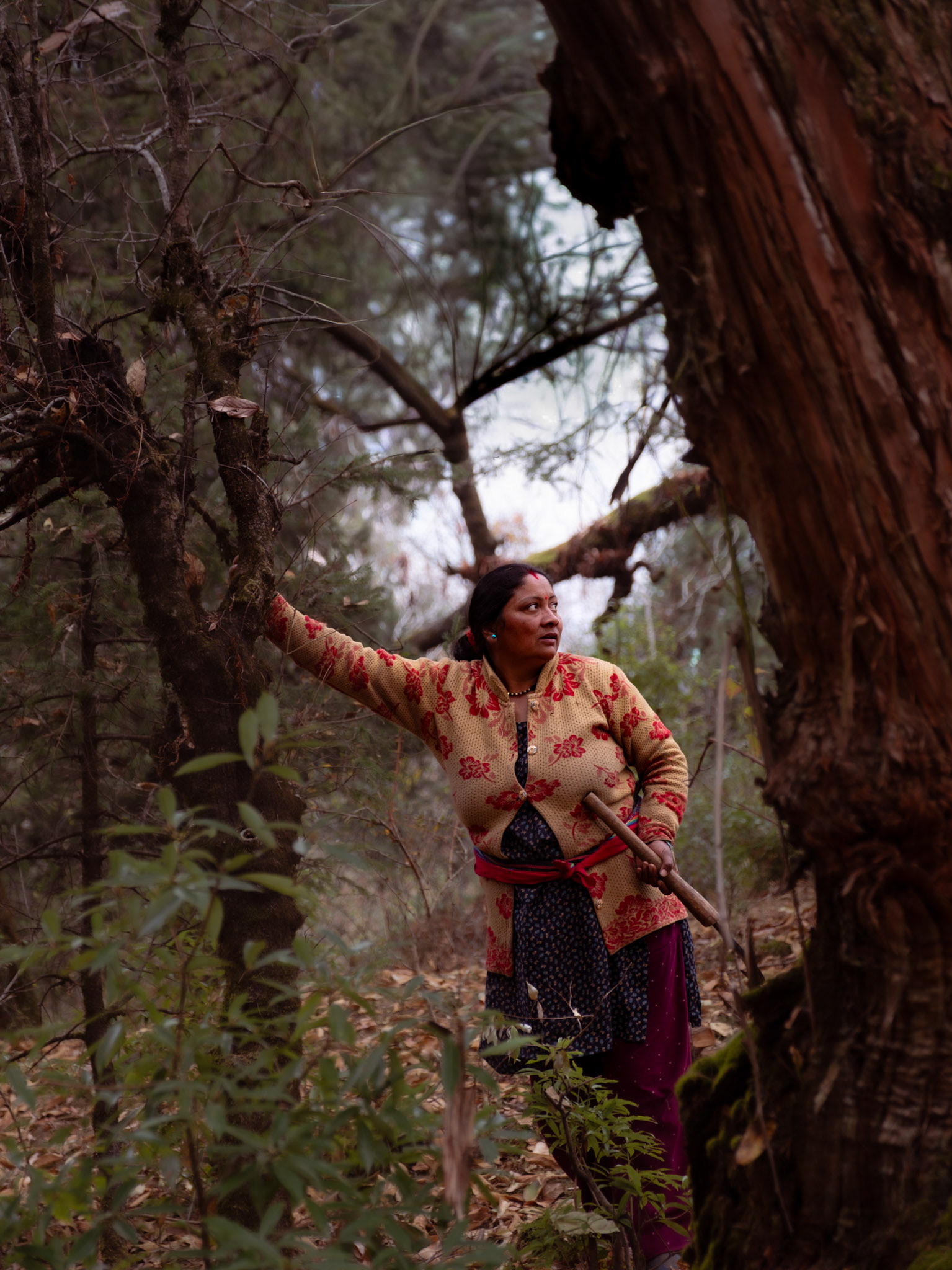
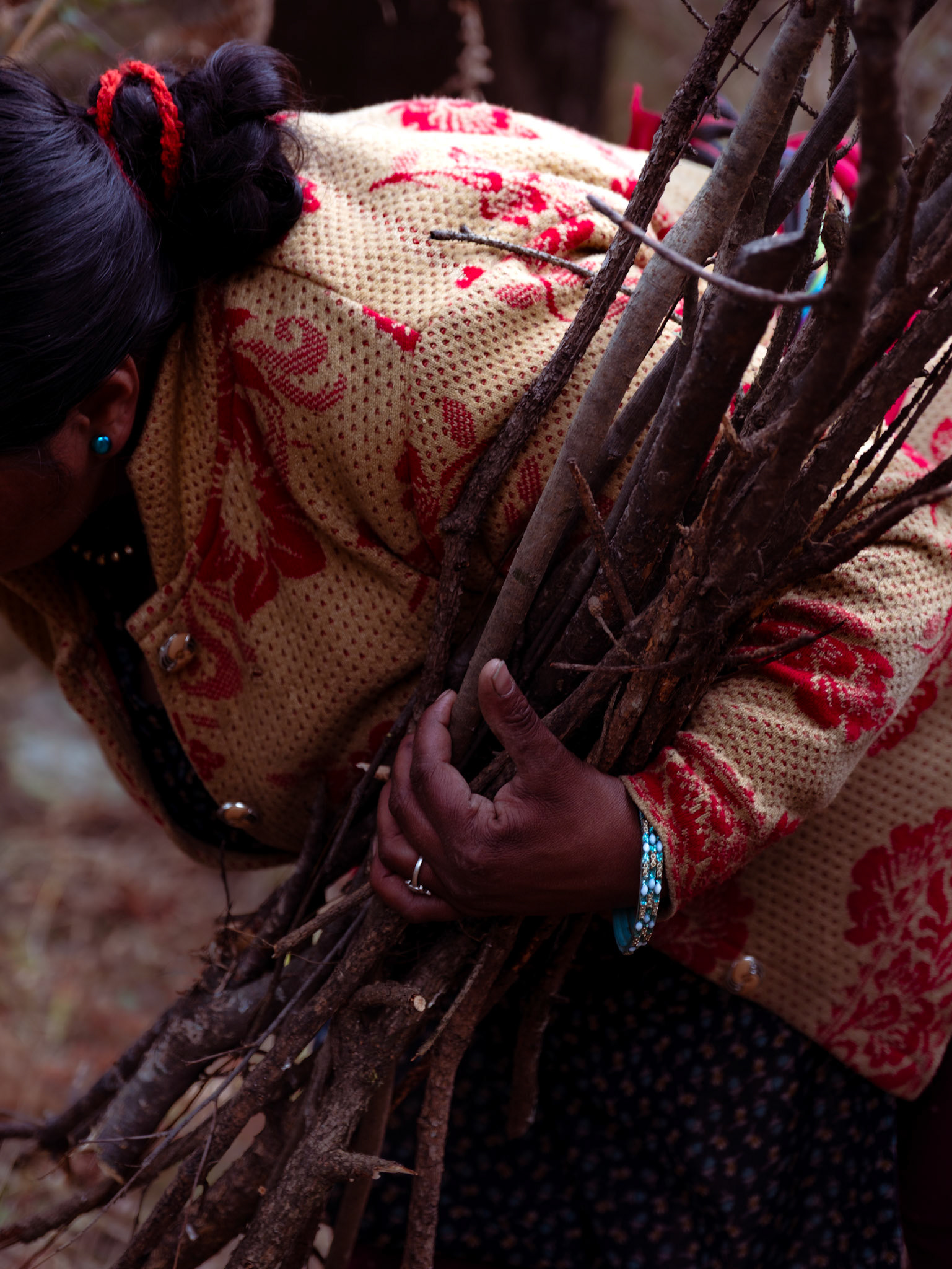
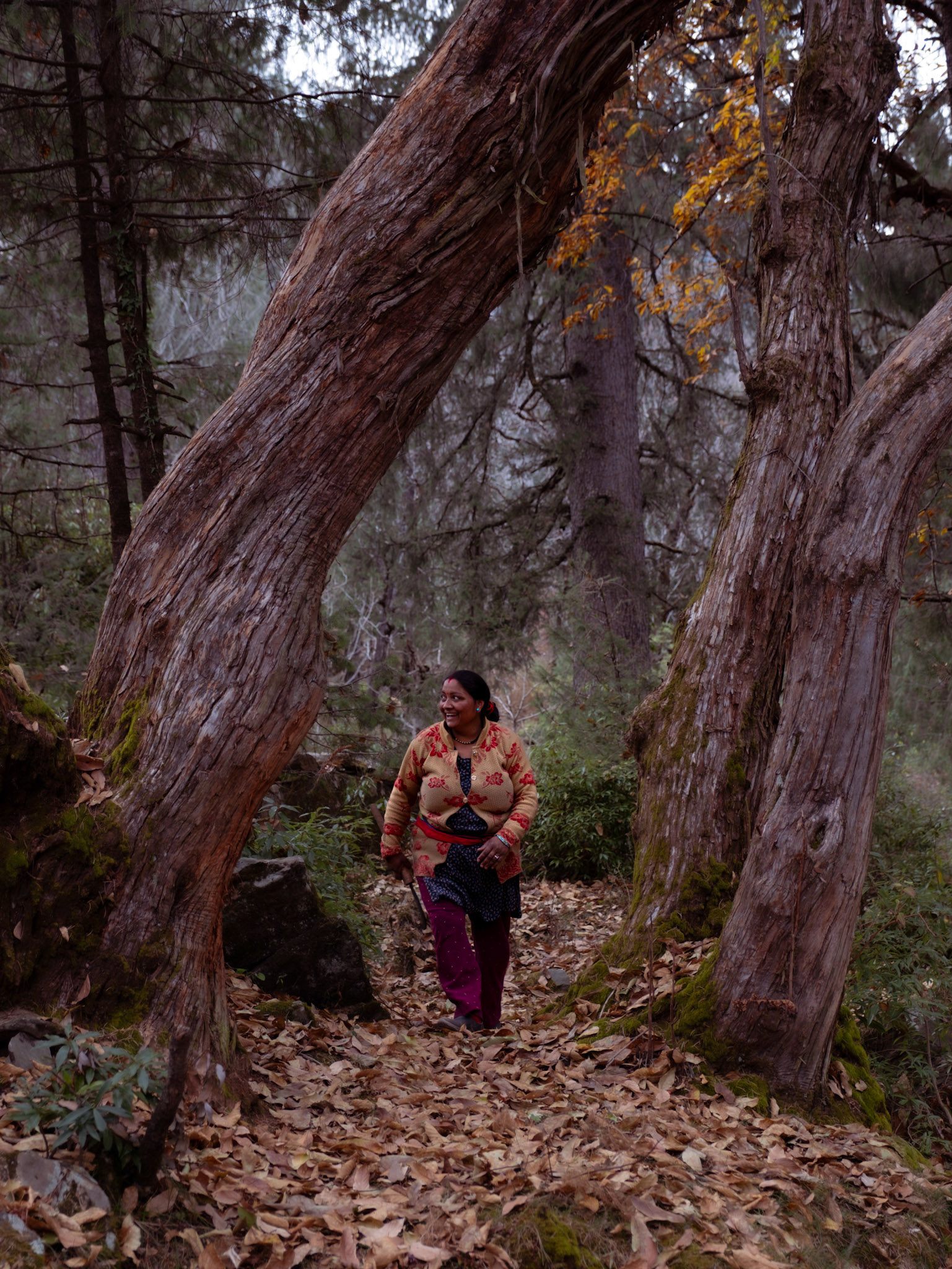
Life in the Himalayas is harsh. Winter is even harsher. But the Himalayan Women face the cold with ease. During this season, three resources are especially vital: wood, dry leaves, and dry grass. Wood is essential for obvious reasons. When burned, it provides heat to warm homes and fuel for cooking. Dry leaves are spread in cow and goat sheds. Mixed with animal dung, they are later collected and spread on the fields, where they serve as an excellent natural fertilizer for newly planted crops. Dry grass is the main food for cattle. Himalayan winters are usually dry, allowing grass to be harvested and stored on trees and rooftops until spring. Himalayan Women often leave their homes very early in the morning, before sunrise. After a hot cup of chai they walk through the cold winter frost, heading deep into the forest. It takes about 1 hour to collect enough woods or dry leaves to fill up the baskets completely.